Community Health Workers: Supporting the Whole Person, Not Just the Patient
Introduction by Michelle Brusio, MSN, RN, CCM
Community Health Workers (CHWs) have been around for over 60 years; their roles have become more critical in addressing social needs, providing community support, and improving overall patient satisfaction by ensuring someone is listening and there to help. Crystal Ports is a Certified Community Health Worker on our CTO team at University of Maryland Upper Chesapeake Health. She and the other CHWs on our team continue to prove the need for CHWs in our community. I always say that Community Health Workers are the heartbeat of our program, as without them, many needs would go unaddressed, and patients would continue to be lost and uninformed. So proud of Crystal for sharing her story, dedication, and hard work she does every day.
The Role of Community Health Workers in Whole-Person Care
In today’s health care system, true healing requires more than treating symptoms. It means seeing the whole person—their environment, culture, and story. That’s where Community Health Workers (CHWs) come in.
According to the American Public Health Association, a Community Health Worker is a frontline professional who understands and connects deeply with the community they serve. Because they often share the same background or lived experience as the people they help, CHWs build trust and bridge the gap between communities and health or social service systems. Through that trusted connection, CHWs help individuals access care, navigate resources, and ensure services are delivered in ways that respect each person’s culture and needs. They also strengthen communities by empowering people with knowledge, offering support and guidance, and promoting self-sufficiency through outreach, education, and advocacy. American Public Health Association. (n.d.). Community Health Workers. https://www.apha.org/apha-communities/member-sections/community-health-workers
According to the State of Maryland, nine core competencies serve as the foundation of CHW training: advocacy and community capacity-building skills; effective oral and written communication skills; cultural competency; understanding of ethics and confidentiality issues; knowledge of local resources and system navigation; care coordination support skills; teaching skills to promote health behavior change; outreach methods and strategies; and understanding of public health concepts and health literacy. Maryland Department of Health. (n.d.). Community Health Workers in Maryland. https://health.maryland.gov/pophealth/Community-Health-Workers/Pages/Home.aspx
Lived Experience as a Community Health Worker
For four years, I have worked with hundreds of patients and families toward their individualized goals. These goals may not always align with what I believe would be best for them, but a critical part of this role is meeting people where they are. The work often begins with a Social Determinants of Health (SDoH) assessment, which helps identify barriers related to food access, financial strain, transportation, housing, and other essential needs.
Motivational interviewing is used when discussing these barriers, as individuals may not initially recognize a challenge or may not yet be ready to address it. I have worked with many individuals facing multiple barriers, making it difficult to determine where to begin. For example, I worked with a man experiencing significant financial strain related to bills, food insecurity, and medication costs, alongside mental health and substance use concerns. While resources were available to assist him, progress could not be made until he was ready to address his mental health needs. Although applications were started for income-based and patient assistance programs, follow-up was unsuccessful when he disengaged. Months later, he shared that his mental health caused him to “check out,” and while he was not ready to address that barrier yet, acknowledging his readiness was essential to continuing the relationship and meeting him where he was.
Another example involves a couple I worked with over several years regarding overwhelming medical bills. The wife, who had historically managed household responsibilities, became overwhelmed by the volume of bills, leading both individuals to avoid seeking medical care out of fear of additional costs. Together, we created an organizational system, applied for financial assistance, and ultimately reduced their medical debt by more than $4,000. They were approved for the Medicare Extra Help program, lowering monthly medication costs, and we implemented a medication multi-pack delivery service to improve adherence. Small interventions, such as providing a shredder to eliminate duplicate or outdated paperwork, significantly reduced stress and improved confidence in managing mail and bills. Acting as an advocate by making phone calls on their behalf helped alleviate feelings of embarrassment and overwhelm, reinforcing the importance of trusted support.
Opportunities for Community Improvement
While Community Health Workers address immediate individual needs, lasting improvements in health outcomes require system-level changes that reduce barriers across communities. In my day-to-day work with the community, I see several areas where meaningful changes could greatly strengthen community-based care:
- Stable and affordable housing, because it is nearly impossible for someone to focus on their health when they are worried about where they will sleep or if they can stay in their home.
- Easier and more coordinated assistance programs, so people are not overwhelmed by paperwork, phone calls, and repeated requests for the same information.
- Reliable access to affordable, nutritious food, so individuals and families do not have to choose between paying bills and eating well.
- Dependable and affordable transportation, because missing appointments often has less to do with motivation and more to do with access.
- Sustainable funding and true integration of Community Health Workers into care teams, so the relationship-based work that improves outcomes can continue long term.
In Summary
Community Health Workers play a vital role in addressing factors beyond clinical care. By meeting individuals where they are, addressing the social determinants of health, and building trusted relationships, CHWs help bridge gaps that traditional health care alone cannot. This work requires patience, empathy, and partnership, recognizing that meaningful health outcomes are achieved through sustained support rather than quick solutions. Ultimately, Community Health Workers exemplify a shared approach to care—transforming “you” into “we” and strengthening communities one connection at a time.
References
American Public Health Association. (n.d.). Community health workers. https://www.apha.org/apha-communities/member-sections/community-health-workers
Maryland Department of Health. (n.d.). Community Health Workers in Maryland. https://health.maryland.gov/pophealth/Community-Health-Workers/Pages/Home.aspx
MHPSalud. (n.d.). The CHW landscape: History and growth of promotoras/CHWs. https://mhpsalud.org/programs/who-are-promotoresas-chws/the-chw-landscape/
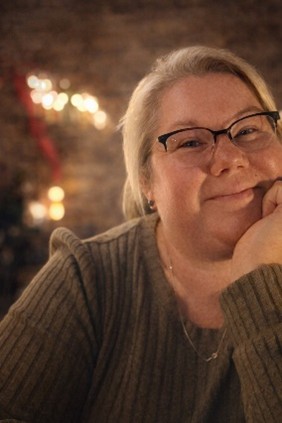 Crystal Ports has spent the past 20 years working in health care and is passionate about meeting people where they are and supporting whole-person care. Beyond her professional role, being a mother is central to who she is, and she is lucky enough to be married to her best friend. She also enjoys genealogy and exploring historic locations.
 Michelle Brusio, MSN, RN, CCM, has been an RN for twenty-six years and in case management for twenty. She is currently the Clinical Manager for Population Health, Care Transformation Organization and Primary Care at University of Maryland Upper Chesapeake Health. Michelle has experience in acute care, payer, primary care, and outpatient case management. Michelle serves on several local committees in Harford County, Maryland. Michelle also serves on several CMSA national committees. On a personal note, Michelle is a fierce allergy mom and advocate, and volunteers with her certified pet therapy dog, Gunnar Henderson.