
Voices of Leadership: Reflections From Past Presidents
BY , DNP, ACNS-BC, NEA-BC, CCM-R, CMSA NATIONAL EXECUTIVE BOD 2013-2019, PRESIDENT 2017-2019
Perhaps the biggest challenge facing CMSA when I first joined the CMSA National Board of Directors in 2014 was membership, although you would not know this when I attended the national conference at the New Orleans Convention Center the same year. The conference was alive with case managers meeting and greeting one another, renewing friendships, and creating new bonds. My chapter in Cleveland was just in the discussion stages, and the only choice I had for membership was at the national level.
My background encompasses insurance case management from the payer and provider perspective, including workers’ compensation. However, my passion was and still is hospital case management. The need patients have when they are in crisis and vulnerable within acute care prompted me to look for like-minded case managers across the country who would recommend ways for case managers to help them. It was within CMSA that I found this group of resolute experts. During my time as president, we gathered the group of professionals who examined in depth the challenges of hospital case management, developed a white paper and issued the information through presentations across the country through the local chapters.
One critical issue during the time I served was, What are the acceptable patients to case manager ratios? This seemed impossible to answer even after experimenting with tables and algorithms. We learned the real question was, How can I meet my patient’s needs and meet my company’s expectations? So, the solution was not in a fixed ratio, but rather in strategies and tools to help the case manager in his or her practice setting achieve positive patient outcomes as well as positive company aims. We felt case managers already knew the answers, but they needed the tools and voice to articulate the plan and prove results to their stakeholders.
CMSA addressed the need to help case managers through the CMSA Standards of Practice, recognized as the industry Standards of Practice (SOP) for Case Managers regardless of whether you belonged to CMSA. As an offshoot of the SOP educational programs, Career Knowledge Pathways (CKP) were developed to teach case managers how to improve their practice in their various work settings based on the SOPs (CMSA, 2014).
CMSA’s Integrated Case Management, written for and by case managers (Fraser, Perez, and Latour), offered another pathway for case managers to view the totality of the patient through one lens, rather than segmented into medical, social, and psychological elements, each with a separate case manager. This tool asked the important question, What would happen to the patient if a case manager did not intervene?
CMSA also developed white papers that taught case managers clinical subject matter on a myriad of topics to increase their knowledge base, since they cannot be experts in all fields, but must know enough to give informed opinions and find the experts when necessary.
When case managers first appeared in practice settings, they were often housed in cubbies or cramped hospital storage areas. I am happy to see them now sitting in the boardroom of health care plans and systems, as executive leadership now looks to case managers for answers to difficult patient care dilemmas. Patients cannot stay in acute care, but where do we find the resources to provide quality ambulatory care? How do we equip patients to manage care, medications, dressing changes, lines and tubes formerly provided in a hospital and be successful as an outpatient?
It is my belief that leaders are servants to their constituents. They need to predict what their members need and work to provide that product. We rely on our remarkable sponsors for support, and their products augment the work our case managers do. However, rather than presenting a product because we have a sponsor, CMSA at the national and local level needs to seek the product and sponsor that meets the members’ knowledge gap for that membership.
My hope is CMSA will continue to grow and serve the multifaceted membership nationally and internationally. As an interprofessional organization, our leaders can meet the daunting health care challenges we face today. I trust they will look for and develop sound policy initiatives that affect case managers and the patients they serve.
References
Case Management Society of America (CMSA). Career Knowledge Pathways. 2014.
Case Management Society of America (CMSA). Hospital Case Management: A White Paper. 2019.
Fraser, K., R. Perez, and C. Latour. CMSA’s Integrated Case Management: A Manual for Case Managers by Case Managers. Springer Publishing Company, 2018.
McLaughlin-Davis, M. “By the Case Management Society of America Hospital Case Management Taskforce.” Professional Case Management, vol. 24, no. 5, 2019, pp. 259–261.
Case Management Society of America (CMSA). Standards of Practice for Case Management. 2022.
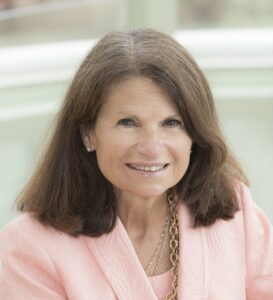
, DNP, ACNS-BC, NEA-BC, CCM-R, served as an Executive Board Member of The Case Management Society of America (CMSA), from 2013 to 2019 and the National President from 2016 to 2018. She served as a Board Member of the American College of Physician Advisors. She serves on the Public Policy Committee for CMSA, the editorial board for Professional Case Management, and Cleveland Clinic Notable Nursing. McLaughlin Davis has disseminated case management practice through numerous articles and national presentations. She authored the Case Management Guide to Population Health and co-authored The Practice of Hospital Case Management: A White Paper through CMSA. She is a contributor to Observation Medicine Principles and Protocols, 2025.