Every Heart Matters: Empowering Underserved to Manage High Blood Pressure
BY HEIDI STEINHEBEL, RN BSN CCM
Hypertension impacts Black African Americans 26% more often than other racial/ethnic groups, and approximately 83% of Black adults with high blood pressure do not have it under control, even while on medications. Deaths related to high blood pressure occur twice as frequently in Black Americans compared to white Americans. This data is a stark indicator of the persistent health disparities that demand urgent attention. Uncontrolled blood pressure is one of the leading causes of heart attacks, strokes, heart failure, dementia and kidney disease. These diseases not only impact a patient’s quality of life but also put a substantial burden on the healthcare system. This is an opportunity for care managers to play a pivotal role in supporting this population by providing targeted outreach, care strategies, and education to manage, prevent, or delay the onset of other chronic conditions.
Factors impacting these disparities are barriers to healthcare, low education, living in a disadvantaged community, and system discrimination. Studies show that implementing self-management alone is not effective even if the patients are on medication and have blood pressure monitoring devices at home. Proper equipment and education are critical along with care team support in controlling BP.
In July 2023, Trinity Health IHA Medical Group, a primary care and specialty medical group located in Ann Arbor, Michigan, completed an analysis to determine blood pressure control across their patient population. It was discovered that Black and African American populations were experiencing a 7% lower rate of control compared to the other groups.
This health equity prompted IHA to act and participate in a targeted pilot program designed to improve blood pressure control. Four Family Medicine-Internal Medicine sites were chosen to participate based on the availability of care management services and the largest population of Black and African American patients with a diagnosis of hypertension, offering the greatest opportunity for making an improvement. The pilot was led by a population health program manager and physician who provided oversight of the process as well as evaluation of outcomes. The team to carry out the pilot included the medical assistants, physicians, care managers, and pharmacists.
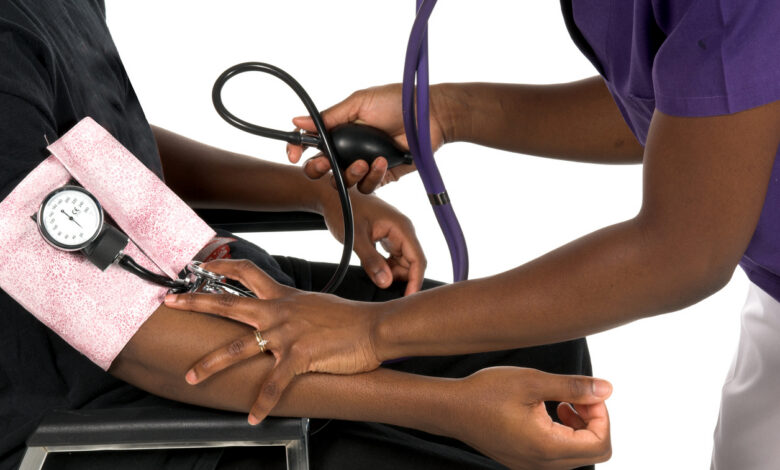
The pilot goal was to engage Black African Americans in care management to encourage them in self-managing their blood pressure in order to control it. To ensure that patients were fully equipped to monitor their blood pressures, IHA implemented a comprehensive, hands-on workshop for their staff that focused on use of the blood pressure devices. It included accurate measurement techniques, troubleshooting issues, and standardized methods for educating patients on how to use the device correctly. This included step-by-step demonstrations and guidance on addressing frequently asked questions. It visibly empowered patients to participate in their health care.
Patients were identified based on pre-determined criteria. Specifically, the patient was Black and African American, 18-85 years of age, had a diagnosis of hypertension, did not already own a home blood pressure machine, and their last blood pressure at an office visit with their primary care physician was elevated.
IHA developed a standard process for offices to schedule uncontrolled HTN patients for follow-up visits, allowing panel coordinators to use prescriptive criteria for connecting patients with care team members, including pharmacist and care managers, during their calls. During their visit with the care team, patients received training on the use of the SMBP machine, education on blood pressure management, and setting patient centered goals around checking and reporting blood pressures. Additionally, there were follow-up calls with a care manager who collected blood pressure readings, addressed barriers to managing blood pressure or taking blood pressure, and re-addressed their goals. This ongoing care management support empowered patients and engaged them in sustained commitment to managing their health. It was the success of the pilot program that prompted expanding across all family internal medicine, academic, and safety net sites in 2024. The pilot showed that IHA was able to decrease the difference in hypertension control rates for their Black and African American patients from their total population from their baseline of 7% to 4.5% in four sites in one year. In addition, 98% of patients had at least one return visit within a year. Average systolic blood pressure was reduced by 8 mm Hg between the first and last office visit, and blood pressure control rates increased from 33.5% to 63.5% in these patients. Among patients with one return visit, 46% had documented SMBP readings and 71% were treated with medications.
IHA developed flags to identify patients that enrolled in the program and received a blood pressure device, and then built a dashboard to track HTN metrics. The program helped 4,176 patients go from non-controlled hypertension to controlled hypertension in FY24 and engaged 5,799 patients in care who were formerly absent. The goal was to have 70% of Black African Americans’ blood pressures controlled, and the final results indicated that 72.3% of Black African Americans had controlled blood pressure in 2024, and 72.6% in 2025.
BENCHMARK AND OUTCOMES
| Control | Patients | |
| Baseline Measurement | 66.40% | 6126 |
| Pilot End Measurement | 72.30% | 976 |
BARRIERS IDENTIFIED
Prior to implementing the pilot, one of the key challenges was that IHA did not have a standard process for outreach and obtaining self-reported blood pressures, leaving us without critical data to direct patient care plans and monitor progress. Additionally, there was no structured process for ensuring follow-up with the practice, so many patients left thinking they had to follow up with their PCP in 6-12 months, without understanding the importance of critical check-in and follow-up with the case managers. Both of these barriers brought to light the importance of engaging the physicians more into the collaboration between the team and a “warm hand-off” from the physician to the case manager or pharmacist, who would then provide deliberate follow-up once the patient left the office. This not only provided real time referrals to the case manager but also made the patients aware of the resources available at their clinic.
REDUCING HEALTH DISPARITIES IN OUR COMMUNITY
IHA has partnered with Trinity Health to host Blood Pressure Academies that focus on robust education on hypertension by a physician, blood pressure screening and education, as well as support from our Lifestyle Medicine team to share ideas to implement behavioral changes to promote control of blood pressure. We are also partnering with Michigan Medicine in a Barber Shop program where blood pressures are taken in a couple of local barber shops by a community health worker (CHW) and then if care is needed, patients are directed to see a primary care doctor for care.
CASE MANAGEMENT PRACTICE IMPROVED
The pilot improved the practice of case management aligning with the CMSA Standards of Practice by reducing health disparities in hypertension control among Black and African American patients through targeted, patient centered strategies. Integrating this program into the pharmacist and care manager work allowed the teams to not only address the hypertension but also the health and social inequities. The care managers and pharmacists were able to assess literacy and adjust education to meet the patient where they were and at the level at which they could understand the information and apply it to their own health. The care team was able to assess patients’ social determinants and either assist them with the needs identified or refer them to an appropriate resource within IHA or the community. It allowed the patient to be empowered by understanding the opportunity given to them to monitor their blood pressure daily and then understand when to report it to their care team members. These small successes built confidence and allowed patients to feel engaged in their care. Patient engagement with care management increased by 6% from 2022 to 2023 and engagement with the pharmacist by 8% in the same time period.
Trinity Health is a recipient of the CMSA Foundation’s 2025 Case Management Practice Improvement Award.
REFERENCES
Egan BM, Sutherland SE, Rakotz M, et al. Improving Hypertension control in primary care with measure accurately, act rapidly, and partner with patients protocol: results at 6 and 12 months. Hypertension.2018:72:1320-1327.
7-step SMBP quick guide. American Medical Association. Available at 7-step SMBP quick guide: 7 steps | American Medical Association
High blood pressure among Black Adults. www.heart.org. (n.d.b). https://www.heart.org/en/health-topics/high-blood-pressure/know-your-risk-factors-for-high-blood-pressure/high-blood-pressure-among-black-adults
Ferdinand, K. C., Yadav, K., Nasser, S. A., Clayton-Jeter, H. D., Lewin, J., Cryer, D. R., & Senatore, F. F. (2017, October). Disparities in hypertension and cardiovascular disease in blacks: The critical role of medication adherence. Journal of clinical hypertension (Greenwich, Conn.).
 Heidi Steinhebel is the senior associate director of care management at Trinity Health IHA Medical Group. A certified case manager for 25 years, she has played a key role in developing and implementing care management programs across commercial and Medicare populations, including collaborations with the Blues. Heidi has been instrumental in building interdisciplinary care teams—integrating dietitians, pharmacists, and specialty care managers—to advance team-based care in the ambulatory setting. She is an active leader within the CMSA Detroit Chapter, serving as secretary and director.